II Prémio de Arte Grünenthal – candidaturas abertas!II Prémio de Arte Grünenthal – candidaturas abertas!

Está a aberta a candidatura ao II Prémio de Arte Grünenthal. O prémio destina-se a artistas portugueses e espanhóis e é promovido pela  Grünenthal Pharma S.A. (Grünenthal), sendo este ano dedicado à fotografia com o tema “Que a dor não seja mais do que uma recordação”.

Será concedido um Primeiro Prémio no valor de 10.000 euros, que não poderá ser dividido, assim como três Menções Honrosas. A dotação económica estará sujeita ao imposto sobre rendimentos de acordo com a legislação em vigor. Considera-se que a fotografia distinguida com o Primeiro Prémio tenha sido adquirida pela Grünenthal, passando a fazer parte da colecção Grünenthal. O seu autor editará a fotografia como cópia
única, cedendo do mesmo modo os direitos totais de exibição e reprodução de forma permanente e para qualquer território.

Carregue aqui para ver o regulamento completo (+)

 .

Está a aberta a candidatura ao II Prémio de Arte Grünenthal. O prémio destina-se a artistas portugueses e espanhóis e é promovido pela Grünenthal Pharma S.A. (Grünenthal), sendo este ano dedicado à fotografia com o tema “Que a dor não seja mais do que uma recordação”.

Será concedido um Primeiro Prémio no valor de 10.000 euros, que não poderá ser dividido, assim como três Menções Honrosas. A dotação económica estará sujeita ao imposto sobre rendimentos de acordo com a legislação em vigor. Considera-se que a fotografia distinguida com o Primeiro Prémio tenha sido adquirida pela Grünenthal, passando a fazer parte da colecção Grünenthal. O seu autor editará a fotografia como cópia
única, cedendo do mesmo modo os direitos totais de exibição e reprodução de forma permanente e para qualquer território.

Carregue aqui para ver o regulamento completo (+)

 .

Cirandar|desenhar a experiência do lugarWandering| drawing the experience of the place


Esta oficina-encontro de dois dias orientada por Susana de Medeiros e organizada em parceria com as associações Tertúlia e Xerem terá lugar no Parque Natural da Costa Vicentina, a cerca de 10 km de Aljezur, nos dias 09 e 10 de Julho.
Pretende potenciar o registo da experiência do lugar a partir do desenho entendido num sentido lato (sobre papel e sobre outros suportes e do desenho no espaço).
O objectivo será o de ‘mapear’ o espaço (a partir do desenho). Os mapas são espaços de representação, são dispositivos que nos permitir ‘ler’ o espaço. Tendemos a organizar o espaço para nos ‘apropriarmos’ dele, para confiscá-lo. Os mapas, espaços de representação do espaço, podem ter múltiplas vocações. O mapa pode nos mostrar um caminho mas também pode despoletar um desejo de fuga ao quotidiano, de exploração de espaços desconhecidos.
Nesta oficina vamos, partir da experiência do caminhar na paisagem e fazer parte dela, do estar em trânsito(oficina-manhãs), convocar memórias de outras experiências (oficina-tardes) de maneira a construirmos uma cartografia(emocional ou não, ficcional ou não), uma geografia pessoal através do desenho.
Ao caminharmos (de manhã) registaremos em cadernos (diários gráficos) o que nos capta a atenção. Haverá lugar para um pic-nic à sombra das árvores. À tarde a oficina decorrerá na antiga escola primária do Barranco da Vaca para, partindo das impressões e dos registos da manhã, exploramos e imaginarmos o(s) território(s) conhecido(s) ou desconhecido(s).

 .

Todos os materiais necessários para a oficina, pic-nic e outras refeições, alojamento e deslocações estão a cargo do participante. Uma listagem com alojamento local será disponibilizada.

 .

Informações e inscrições|
(00351) 91 602 82 34 | tertulia.associacao@gmail.com

 .

{Custo da oficina}
>40,-euros não sócios
>35,-euros para sócios (Tertúlia e Xerem)
Será necessário efectuar um depósito ou transferência bancária no valor da oficina até dia 04 de Julho e enviar o seu comprovativo para o email indicado acima.

 .

Será necessário:
calçado e roupa confortável para caminhar, chapéu e protector solar(manhãs) e roupa indicada para desenhar|pintar(tardes).Pic-nic (comida e bebidas).

 .

{Material necessário}
Manhãs
Bloco de desenho A4 (>120 g pelo menos)
Marcadores ou canetas de várias espessuras (preto ou sépia)
Lápis de grafite (2B, 4B ou 6B)
Carvão
Aguarelas (preto e mais 2 cores ou uma caixa pequena) ou tinta da china(preta e duas outras cores)
Recipientes
Garrafa de água
Pincéis (de duas espessuras diferentes)
Máquina fotográfica digital

 .

Tardes
Folhas A1 ou A0 brancas (4 para cada tarde, > 120g)
Folhas papel vegetal e de esquiço (4 de cada)
Marcadores ou canetas de várias espessuras pretos ou sépia
Lápis de grafite|carvão(barra ou lápis)
Aguarelas (preto e mais 2 cores ou uma caixa pequena) e tinta da china(preta e duas outras cores)
Pastéis de óleo (preto,branco e duas outras cores)
Pastéis secos (preto,branco e duas outras cores)
Pincéis (de 3 espessuras diferentes)
Recipientes
Corda, cordel, linhas de costura, agulha
Cola UHU
Pano|toalha
Mapas de estradas, de cidades, das estrelas, do corpo e outros,,,para cortar, desenhar, etc…
Máquina fotográfica digital e cabo usb

 .

Número máximo de participantes: 12

 .

Susana de Medeiros
Nasce em 1971 em Ponta Delgada (São Miguel, Açores). Vive actualmente no Algarve. Licenciada em Direito pela Universidade de Coimbra e em Artes Plásticas pela ESTGAD (Caldas da Rainha), é também bacharel em Belas Artes pela Universidade de Nottingham Trent, tendo sido aí Bolseira no âmbito do programa europeu Aprendizagem ao Longo da Vida-Erasmus/Sócrates.
Lecciona no ensino universitário (na Universidade do Algarve, Curso de Artes Visuais) e desenvolve projectos de educação não-formal nas áreas das artes visuais, teatro e da mediação e promoção da leitura.
Entre os locais onde desenvolveu projectos como artista plástica (no âmbito das artes visuais) e expôs os seus trabalhos destacam-se Cuenca (Espanha), Maputo (Moçambique), Nottingham (Inglaterra), Nova York (E.U.A.), São Petersburgo (Rússia) e Angra do Heroísmo, Caldas da Rainha, Coimbra, Lagos, Lisboa, Portimão e Sines (Portugal). Artista multidisciplinar (desenho, escultura, vídeo, fotografia e instalação), o trabalho que desenvolve procura lançar pontes entre diferentes linguagens e meios expressivos, anunciar possíveis outras relações : 1.entre os objectos, as imagens que deles fazemos e a nossa relação com eles 2.entre a linguagem falada, escrita ou gestual 3. entre ‘aquilo’ que entra pelos sentidos e a que chamamos real e a sua ‘tradução’.

 .

Download do programa aqui (+)

 .

 .

usana de Medeiros


Nasce em 1971 em Ponta Delgada (São Miguel, Açores). Vive actualmente no Algarve. Licenciada em Direito pela Universidade de Coimbra e em Artes Plásticas pela ESTGAD (Caldas da Rainha), é também bacharel em Belas Artes pela Universidade de Nottingham Trent, tendo sido aí Bolseira no âmbito do programa europeu Aprendizagem ao Longo da Vida-Erasmus/Sócrates.

Lecciona no ensino universitário (na Universidade do Algarve, Curso de Artes Visuais) e desenvolve projectos de educação não-formal nas áreas das artes visuais, teatro e da mediação e promoção da leitura.

Entre os locais onde desenvolveu projectos como artista plástica (no âmbito das artes visuais) e expôs os seus trabalhos destacam-se Cuenca (Espanha), Maputo (Moçambique), Nottingham (Inglaterra), Nova York (E.U.A.), São Petersburgo (Rússia) e Angra do Heroísmo, Caldas da Rainha, Coimbra, Lagos, Lisboa, Portimão e Sines (Portugal). Artista multidisciplinar (desenho, escultura, vídeo, fotografia e instalação), o trabalho que desenvolve procura lançar pontes entre diferentes linguagens e meios expressivos, anunciar possíveis outras relações : 1.entre os objectos, as imagens que deles fazemos e a nossa relação com eles 2.entre a linguagem falada, escrita ou gestual 3. entre ‘aquilo’ que entra pelos sentidos e a que chamamos real e a sua ‘tradução’.


Costa Vincentina Natural Park (10 km from Aljezur) will be the meeting point for a two day workshop directed by Susana de Medeiros and organised by Tertulia and Xerem on the 9th and 10th of July. Through drawing exercises it aims to expose participants to the experiences of a place, allowing them to express in visual forms an emotional cartography and/or a personal geography.
Walks will be taken in the morning with occasional breaks to observe and record the impacts of the sensory stimuli in ‘travel notebooks’ and using photography. A picnic will take place in the shade of trees. The studio work will be undertaken at Barranco da Vaca old Primary School. The afternoon’s exercises will encourage a development of a personal mapping of the space based on previous memories that would interlace with the morning’s experiences. Maps give orientations but also can create the urge to get loss in space. We will be trying to build different reinterpretation of the real in order to find ‘coordinates’ to trace ways, paths, trails imaginary or real. Notion of space, place, and territory among other would be object of discussion.

 .

The participants should bring all materials necessary for the workshop, as well as food for the picnic. Meals and accommodation are not provided. Accommodation can be arranged.

 .

For more information or to book|
(00351) 91 602 82 34 | tertulia.associacao@gmail.com

 .

{Workshop fee}
>40,-euros non members
>35,-euros members (Tertúlia e Xerem)
A deposit of €35(members) or €40(non-members) is necessary on booking (or till the 4th of July) to secure your place as well as sending your proof to the email indicated above.

 .

.One should wear comfortable clothes and walking shoes, hat and sun protection (mornings) and appropriate clothes to draw|paint (afternoons). Picnic meal and drinks.

 .

{Material necessary}
Mornings
Sketch book (size A4, at least 120g)
Markers or pens, black or sepia, with different thickness
Graphite pencils|charcoal | crayon
Aquarelles (black and 2 other colours) or china ink (black and 2 other colours)
Vessels or recipients
Water bottle
Brushes (2 different thickness)
Digital camera and USB cable

 .

Afternoons
8 Sheets of white paper (4 for each afternoon, size A1 or A0, more than 120g)
4 Sheets of parchment paper (A4 or A3)|4 sheets of tracing paper (a4 or A3)
Markers or pens, black or sepia, with different thickness
Graphite pencils| charcoal | crayon
Aquarelles (black and 2 other colours) and china ink (black and 2 other colours)
Vessels or recipients
Water bottle
Brushes (3 different thickness)
UHU glue
Rope, twine, sewing thread, needle
Cloth or towel
Road maps, city maps, maps of the stars, maps of the body and other maps to cut, draw on them, etc.,

Digital camera and USB cable

 .

Participants: 12 (maximum)

 .

Susana de Medeiros

Born in the Azorean Islands (1971). Lives in the Algarve.
Law Degree by Coimbra University |BA Hons Fine Arts by Nottingham Trent University |Fine Arts Degree by ESAD-Caldas da Rainha (former ESTGAD).
Currently teaches ‘Drawing’ and ‘Project’ in Faro at the University of the Algarve (BA Hons Fine Arts) and develops projects of non-formal education in the visual arts, theater and the mediation and promotion of reading.
Multidisciplinary artist that has exhibited and developed art projects at: Cuenca (Spain), Maputo (Mozambique), Nottingham (England), New York (USA), St. Petersburg (Russia) and Angra do Heroísmo, Caldas da Rainha, Coimbra, Lagos, lisboa, Portimão e Sines (Portugal). The artworks seek to build bridges between different languages ​​and expressive means and to announce other possible relations: 1.between the objects, images that we make of them and our relationship with them 2. between the language spoken,written or sign language, 3. between what we call real and its ‘translation’.

 .

Programme download here (+)

 .

IMISCOE ANNUAL CONFERENCEIMISCOE ANNUAL CONFERENCE


IMISCOE  Eighth Annual Conference: Dynamics of European Migration Space: Economy, Politics and Development

Warsaw, Poland
7-9 September 2011


The IMISCOE Research Network unites 27 established European research institutes in pursuit of studies under the themes of international migration, integration and social cohesion in Europe (for more details see www.imiscoe.org). Alongside the network’s regular activities, its members and guests come together every year at the IMISCOE Annual Conference.

The main theme of the Eighth Annual Conference is Dynamics of European Migration Space: Economy, Politics and Development, with a focus on the impact of migration upon development in the new EU member states and their direct Southern and Eastern neighbours.

The programme of the first day includes an opening session and two panels. The keynote speaker during first plenary session will be Prof. Russell King (Sussex University), whose opening lecture is entitled Migration and Development: The Old Ideas and New Insights.

This will be followed by a session entitled Migration and Social and Economic Change: The Perspectives of European Peripheries, with participation by four panel speakers. These speakers will represent expertise concerning different groups of sending countries or regions: namely, North Africa, the Balkans and Central Eastern Europe.


more details (+)


 .


IMISCOE Eighth Annual Conference: Dynamics of European Migration Space: Economy, Politics and Development

Warsaw, Poland
7-9 September 2011


The IMISCOE Research Network unites 27 established European research institutes in pursuit of studies under the themes of international migration, integration and social cohesion in Europe (for more details see www.imiscoe.org). Alongside the network’s regular activities, its members and guests come together every year at the IMISCOE Annual Conference.

The main theme of the Eighth Annual Conference is Dynamics of European Migration Space: Economy, Politics and Development, with a focus on the impact of migration upon development in the new EU member states and their direct Southern and Eastern neighbours.

The programme of the first day includes an opening session and two panels. The keynote speaker during first plenary session will be Prof. Russell King (Sussex University), whose opening lecture is entitled Migration and Development: The Old Ideas and New Insights.

This will be followed by a session entitled Migration and Social and Economic Change: The Perspectives of European Peripheries, with participation by four panel speakers. These speakers will represent expertise concerning different groups of sending countries or regions: namely, North Africa, the Balkans and Central Eastern Europe.


more details (+)


 .

O FESTIVAL VER E FAZER FILMES EM DEBATE

.

9 de Junho 21h30 | Casa do Brasil | Lisboa uma iniciativa Buala e Xerem

.

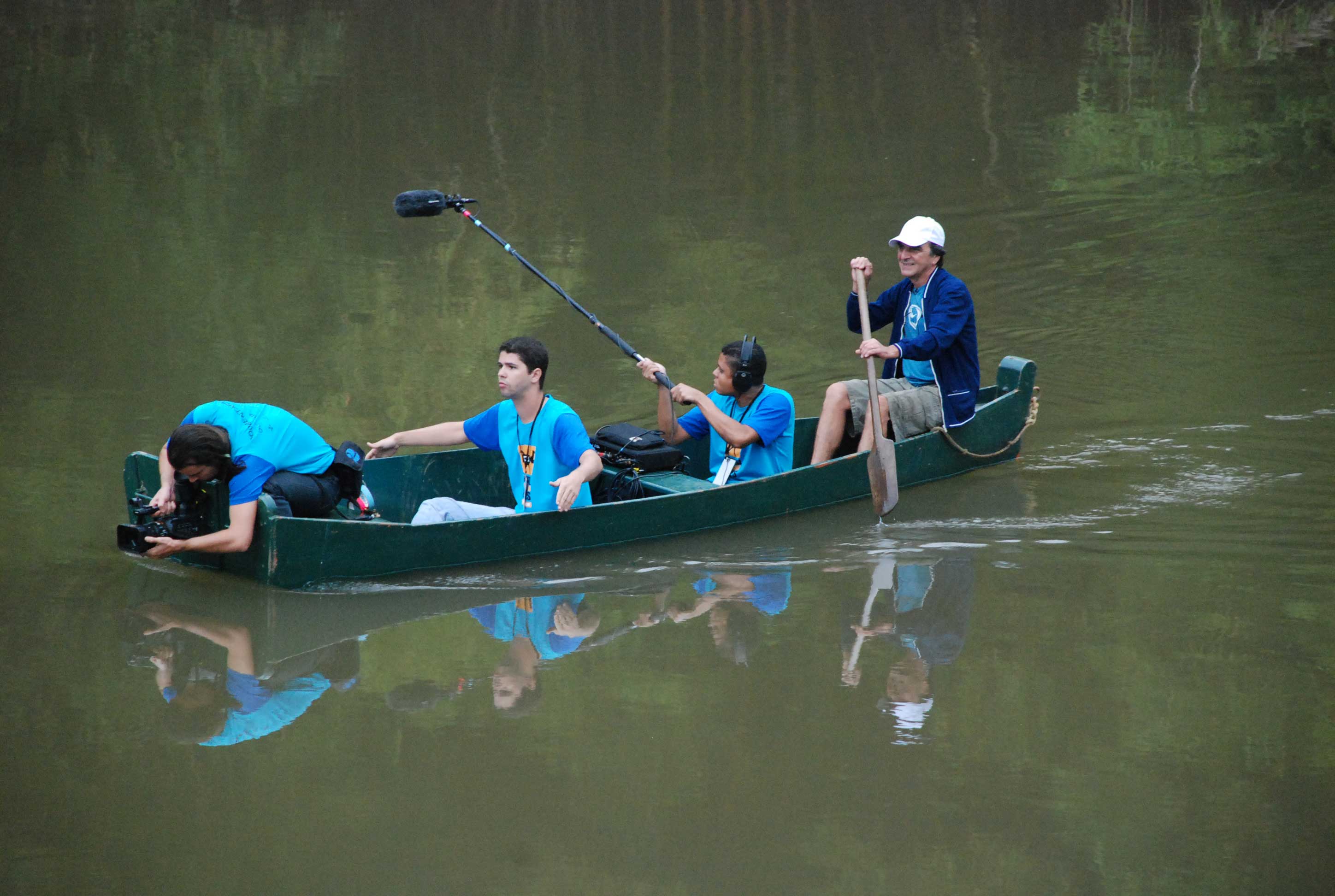
O Festival Ver e Fazer Filmes é realizado no Brasil pela Fundação Cultural Ormeo Junqueira Botelho e o Instituto Cidade de Cataguases. É uma edição do CINEPORT – Festival de Cinema dos Países de Língua Portuguesa, cujo formato é mais direcionado à competição do cinema profissional em português, e alterna com o mesmo, com preocupações mais centradas na formação e no processo. Em 2010, o Festival movimentou em Cataguases (Minas Gerais), no período de 3 a 14 de Agosto, a produção de curtas-metragens de ficção e documentários, fóruns com especialistas, acções de intercâmbio entre jovens da região, oficinas preparatórias, exposições, teatro e shows musicais. A cidade foi palco de uma animada disputa que envolveu duas universidades e cinco equipas de jovens do Brasil, Moçambique, Angola, Cabo Verde e Portugal, este último representado pelos três jovens lacobrigenses Jorge Rocha, Lia Ramos e Sérgio Moreira.

.

Mais informações sobre o festival www.festivalverefazerfilmes.org.br

.

Esta apresentação em Lisboa, irá mostrar os documentários produzidos durante o Festival e pretende não só mostrar os filmes, mas também compreender e gerar debate em torno do processo de criação artística que preside estes Festivais. Assemelhando-se a um modelo de residência artística em cinema, tal estrutura impulsiona o desenvolvimento de filmes em formato intensivo e, pela sua natureza, acolhe e estimula criativos dos países de Língua Portuguesa, que se debatem com grandes assimetrias na sua produção cinematográfica.

.

A apresentação dos filmes será complementada por um momento de conversa com o crítico de cinema António Loja Neves.

.

Programação: DOCUMENTÁRIOS produzidos durante o Festival Ver e Fazer Filmes 2010:

.

“A Espera no Quintal” Esperar e ter certeza de que os sonhos um dia vão se concretizar, quando já nada existe descobrimos o cruzamento de esperança. Direção: Emidio Josine | Direção de fotografia: Amancio Mondlane | Direção de som: Nelson Mondlane | Roteiro: de Ivaldo Neto | Produção executiva: Amanda Faulhaber | Montagem: Eduardo Yep | Pesquisa: Ivaldo Neto

.

“Tempo-de-Criança” Um parque vazio procura ganhar vida buscando infâncias e um pouco de movimento. Direção: Tambla Almeida | Direção de fotografia: Arilson Almeida | Direção de som: David Cordeiro Lima Medina | Roteiro: Tambla Almeida, David Cordeiro Lima Medina, Arilson Almeida, Heitor Luchini, Marcela Andrade da Silva | Produção executiva: Heitor Luchini | Montagem: Bruno Rocha | Pesquisa: Marcela Andrade da Silva

.

“Contracorrente” Contracorrente retrata os sonhos, desejos e frustrações do Rio Pomba e destaca sua importância para os que vivem em suas margens. Direção: Paulo Roberto de Souza Junior | Direção de fotografia: Leandro Cunha | Direção de som: Ismael Farias | Roteiro: Paulo Roberto de Souza Junior, Leandro Cunha, Ismael Farias, Andréa Toledo, Bruno Diego, Samantha de Almeida | Produção executiva: Samantha de Almeida | Montagem: Bruno Diego, Ismael Farias | Pesquisa: Andréa Toledo

.

“Escrito nas Telhas” No Bairro Leonardo há lugar para sorrir. Agarra-se a vida com garra, soltam-se as amarras que prendem o ar. Direção: Jorge Rocha | Direção de fotografia: Lia Ramos | Direção de Som: Sérgio Moreira | Roteiro: Jorge Rocha, Lia Ramos, Sérgio Moreira | Produção executiva: Felipe de Souza Carvalho, Marise Paes Jenkins | Montagem: Rafael Fernandes | Pesquisa: Felipe de Souza Carvalho

.

“Cicatrizes” Cicatrizes é uma história de futebol contada num dos contos do escritor cataguasense Luiz Ruffato mas que na verdade o conto tornou-se mesmo uma realidade. Direção: Manuel Narciso “Tonton” | Direção de fotografia: Milton Rosalino Xavier Machado | Direção de Som: Mawete Paciência Kiawa | Roteiro: Mawete Paciência Kiawa | Produção executiva: Thalita Hegina | Montagem: EdésioP. Souza | Pesquisa: Luiz Fernando

.

Download do programa aqui (+)

.

.


Global Art symposium in SalzburgGlobal Art symposium in Salzburg

 .

Global Art
A symposium held by the AICA (Austrian and Swiss sections) and the Salzburg International Summer Academy of Fine Arts
Concept: Sabine B. Vogel, Hildegund Amanshauser
Duration: 29 – 31 July 2011
Location: Künstlerhaus, Salzburg

 .

Symposium
Globalisation is generally taken to refer to an economic process. But what does this worldwide development signify for art? Are we at the beginning of a new development, which we might call global art – and what do we understand by this? How far do the new living conditions of globality influence contemporary art? Since art has been internationally linked for centuries, is there now some new quality that distinguishes global art? How does what we might call global art relate to the debate on post-colonialism?
These issues will be debated in a 2-day symposium, 29 – 30 July 2011, in which theorists and artists will attempt to clarify the term and the concepts involved in “global art”. The symposium will be organised by the Austrian and Swiss sections of the AICA (International Association of Art Critics) together with the Salzburg International Summer Academy of Fine Arts.

 .

Global art – wish or reality?
“It is time to re-stage the world”, writes the Indian cultural theorist Nancy Adajania. Her aim is to achieve a state able “to release the cultural self towards others in a manner that bypasses dependency and embraces collaboration, making for a productive cosmopolitanism”. Thus the objective is a society based on exchange and mutuality.
The basis of this “re-staging” is globalisation, which Adajania counters with “globalism”. While globalisation refers to the world economic transformation process, which started in 1989, globality stands for life in a globalised world. According to Ulrich Beck, the term refers to the way of life in a “perceived or reflexive world society”, determined by multiplicity without unity.  Globalism, according to Beck, is the neo-liberal ideology of globalisation: economic activity displaces political activity, with the aim of world economic dominion. Adajania, on the other hand, sees “globalism” as “a reflection on, and antidote to, globalisation”.

 .

Global art
For art, globalisation means first of all the end of western hegemony and the beginning of a world trade market. With globalisation, more and more artists enter the global art market, followed by galleries and collectors from a variety of cultures and regions. The influence of globalisation is beginning to emerge clearly in the themes of the artworks.  Globality is increasingly under discussion, as for instance when at the 2008 Sharjah Biennial, the Indian artists’ collective CAMP, with their radio and book project Wharfage call maritime trade a “space of conflict”, inviting viewers to see the picturesque ships in the Emirate not as motifs for tourist snapshots, but in the global context of the goods, the working conditions and the restricted rights of the seamen.  In his grand-scale installation Nations, the Indian artist N.S. Harsha – who was awarded the prestigious British Artes Mundi Prize (worth ₤40,000) in 2008 – stretched threads from 192 sewing-machines on which the national flags of all the United Nations countries appear to be in the process of manufacture; this is a powerful image for the fellowship of all countries in the tangle of nations and the many interconnections between them. Taysir Batniji uses a widely-known artistic language when he photographs Israeli watchtowers in his native Palestine à la Bernd & Hilla Becher, thus politicising the functionalist style of the Düsseldorf couple.

Is this global art? Does global art refer generally to art created no longer from the standpoint of western cultural superiority, but from the experience of globality and under the conditions of globalisation? Is global art a collective term for works that trace the history of images and their worldwide dissemination – or does it refer to those works, which manage to overcome the long outdated geo-political division of the world into western/non-western? Is the mark of global art a worldwide intelligible visual language, or is it the use of themes concerning globalisation? Or is global art the wish for and the promise of a multicentric perception of the world, in which local and global are expressly linked, traditions and current developments juxtaposed, and boundaries of cultural hegemony open to discussion?

 .

Speakers:
Nancy Adajania, culture theorist, curator and film-maker, New Delhi
Question: If global art stands for new possibilities, qualities and chances for artists and art institutions in former peripheral art scenes, what exactly does that mean?

 .

Hans Belting, art historian, professor emeritus at the State University of Arts and Design, Karlsruhe; published  works include: Florenz und Bagdad. Eine westöstliche Geschichte des Blicks, Munich: C. H. Beck, Munich, 2008 an he is coeditor (together with Andrea Buddensieg) of The Global  Art World. Audiences, Markets and Museums, Hatje Cantz Osterfildern 2009. He initiated  together with Peter Weibel the GAM – Global Art and the Museum at ZKM | Center for Art and Media Karlsruhe in 2006.
Question: How would you describe the history of international exchange in the art world with a few examples, which illustrate this exchange? What is exactly global art, how could it be defined, what its new quality?

 .

Bassam El Baroun, writer, curator, Alexandria, Egypt; co-founder of the Alexandria Contemporary Arts Forum (ACAF), curator of Manifesta 8 in Murcia and Cartagena, Spain
Question: What impact had the globalisation (economy, media etc) on the Egyptian revolution of February and March 2011? What effects does it have on the art scene in general and on your work specifically?

 .

Monica Juneja, art historian, lecturer in Global Art History at the University of Heidelberg; published works include: Text und Bild in den Berichten über aussereuropäische Welten, theme issue, Zeitenblicke (ed. with Barbara Potthast), 2008.
Question: What are the challenges of the new branch Global Art History?

 .

Jitish Kallat, artist, Mumbai, India
Question: What does global art mean for you and your artistic production? What role does it play in the Indian Art scene?

 .

Christian Kravagna, art historian, critic and curator; specialities: post-colonialism, migration, critique of institutions and representation, visual culture, art and politics. Since 2006 Professor of Postcolonial Studies at the Vienna Academy of Fine arts.
Question: Global Art and global curating?

 .

 .

 .

Global Art
A symposium held by the AICA (Austrian and Swiss sections) and the Salzburg International Summer Academy of Fine Arts
Concept: Sabine B. Vogel, Hildegund Amanshauser
Duration: 29 – 31 July 2011
Location: Künstlerhaus, Salzburg

 .

Symposium
Globalisation is generally taken to refer to an economic process. But what does this worldwide development signify for art? Are we at the beginning of a new development, which we might call global art – and what do we understand by this? How far do the new living conditions of globality influence contemporary art? Since art has been internationally linked for centuries, is there now some new quality that distinguishes global art? How does what we might call global art relate to the debate on post-colonialism?
These issues will be debated in a 2-day symposium, 29 – 30 July 2011, in which theorists and artists will attempt to clarify the term and the concepts involved in “global art”. The symposium will be organised by the Austrian and Swiss sections of the AICA (International Association of Art Critics) together with the Salzburg International Summer Academy of Fine Arts.

 .

Global art – wish or reality?
“It is time to re-stage the world”, writes the Indian cultural theorist Nancy Adajania. Her aim is to achieve a state able “to release the cultural self towards others in a manner that bypasses dependency and embraces collaboration, making for a productive cosmopolitanism”. Thus the objective is a society based on exchange and mutuality.
The basis of this “re-staging” is globalisation, which Adajania counters with “globalism”. While globalisation refers to the world economic transformation process, which started in 1989, globality stands for life in a globalised world. According to Ulrich Beck, the term refers to the way of life in a “perceived or reflexive world society”, determined by multiplicity without unity. Globalism, according to Beck, is the neo-liberal ideology of globalisation: economic activity displaces political activity, with the aim of world economic dominion. Adajania, on the other hand, sees “globalism” as “a reflection on, and antidote to, globalisation”.

 .

Global art
For art, globalisation means first of all the end of western hegemony and the beginning of a world trade market. With globalisation, more and more artists enter the global art market, followed by galleries and collectors from a variety of cultures and regions. The influence of globalisation is beginning to emerge clearly in the themes of the artworks. Globality is increasingly under discussion, as for instance when at the 2008 Sharjah Biennial, the Indian artists’ collective CAMP, with their radio and book project Wharfage call maritime trade a “space of conflict”, inviting viewers to see the picturesque ships in the Emirate not as motifs for tourist snapshots, but in the global context of the goods, the working conditions and the restricted rights of the seamen. In his grand-scale installation Nations, the Indian artist N.S. Harsha – who was awarded the prestigious British Artes Mundi Prize (worth ₤40,000) in 2008 – stretched threads from 192 sewing-machines on which the national flags of all the United Nations countries appear to be in the process of manufacture; this is a powerful image for the fellowship of all countries in the tangle of nations and the many interconnections between them. Taysir Batniji uses a widely-known artistic language when he photographs Israeli watchtowers in his native Palestine à la Bernd & Hilla Becher, thus politicising the functionalist style of the Düsseldorf couple.

Is this global art? Does global art refer generally to art created no longer from the standpoint of western cultural superiority, but from the experience of globality and under the conditions of globalisation? Is global art a collective term for works that trace the history of images and their worldwide dissemination – or does it refer to those works, which manage to overcome the long outdated geo-political division of the world into western/non-western? Is the mark of global art a worldwide intelligible visual language, or is it the use of themes concerning globalisation? Or is global art the wish for and the promise of a multicentric perception of the world, in which local and global are expressly linked, traditions and current developments juxtaposed, and boundaries of cultural hegemony open to discussion?

 .

Speakers:
Nancy Adajania, culture theorist, curator and film-maker, New Delhi
Question: If global art stands for new possibilities, qualities and chances for artists and art institutions in former peripheral art scenes, what exactly does that mean?

 .

Hans Belting, art historian, professor emeritus at the State University of Arts and Design, Karlsruhe; published works include: Florenz und Bagdad. Eine westöstliche Geschichte des Blicks, Munich: C. H. Beck, Munich, 2008 an he is coeditor (together with Andrea Buddensieg) of The Global Art World. Audiences, Markets and Museums, Hatje Cantz Osterfildern 2009. He initiated together with Peter Weibel the GAM – Global Art and the Museum at ZKM | Center for Art and Media Karlsruhe in 2006.
Question: How would you describe the history of international exchange in the art world with a few examples, which illustrate this exchange? What is exactly global art, how could it be defined, what its new quality?

 .

Bassam El Baroun, writer, curator, Alexandria, Egypt; co-founder of the Alexandria Contemporary Arts Forum (ACAF), curator of Manifesta 8 in Murcia and Cartagena, Spain
Question: What impact had the globalisation (economy, media etc) on the Egyptian revolution of February and March 2011? What effects does it have on the art scene in general and on your work specifically?

 .

Monica Juneja, art historian, lecturer in Global Art History at the University of Heidelberg; published works include: Text und Bild in den Berichten über aussereuropäische Welten, theme issue, Zeitenblicke (ed. with Barbara Potthast), 2008.
Question: What are the challenges of the new branch Global Art History?

 .

Jitish Kallat, artist, Mumbai, India
Question: What does global art mean for you and your artistic production? What role does it play in the Indian Art scene?

 .

Christian Kravagna, art historian, critic and curator; specialities: post-colonialism, migration, critique of institutions and representation, visual culture, art and politics. Since 2006 Professor of Postcolonial Studies at the Vienna Academy of Fine arts.
Question: Global Art and global curating?

 .

 .

Patio of the Llotja: Open call for emerging photographersPatio of the Llotja: Open call for emerging photographers

 .

The Patio of the Llotja is a new space that is used during the festival EMERGENT-LLEIDA 2011, specifically for the Nice to Meet You series of events. It is a meeting point intended to establish exchanges and create networks and synergies between emerging artists/photographers and the curators, festivals, galleries or publishers. EMERGENT-LLEIDA Festival suggests that this is the place to make known your work within and beyond the festival.
In keeping with this philosophy, every year the festival will adopt fourty emerging artists through an international public call. They will have the opportunity to show their portfolio to players within the art sector, who have been specifically invited to attend the festival.

 .

PHASE 1
Rights of participation Phase 1

Free
Who can participate

Any artist or photographer who considers her/himself “emerging”, regardless of age or nationality.
Work to show

You must show a series of between 15 and 20 topically-connected images, in digital format.
How to submit the works

Works must be sent via the festival’s website.
You must fill out the form and then you will be able to upload the images.
Technical conditions for the images:
Images may not exceed 1200 pixels on any side.
Images may be no larger than 900 KB.
Photographs must be sent with the embedded RGB profile (1998)
Deadline for submission of on-line work

The deadline for submission of work is 30th June 2011.
Selection process for authors attending Patio of the Llotja

Rafael Doctor (director of MUSAC 2001-2009) is responsible for selecting works and authors to participate in the Patio of the Llotja. Selected authors will be personally notified by mail.

 .

PHASE 2 OF SELECTION

The finalist authors, along with their printed portfolios, will attend the Patio of the Llotja (Lleida-Spain) on 27st and 28nd October 2011.
Authors are required to bring unmounted images for their portfolio printed in 30x40cm size (the organization will provide a box and folder with which to show the works). They may attach all the material they think they will need to complete their portfolio.

There will be a physical space to display their work to the followers as well as the general public, while they will compete for the different awards associated with the activity of the Patio of the Llotja.
Rights of participation: € 79

The authors selected to participate in El Pati de la Llotja are required to pay € 79 at the festival by way of participation fees. This amount must be paid into the account of the festival no later than 7 days after the selection is announced. The amount does not include accommodation, subsistence or travel, which will be borne by each author.

 .

More details: http://www.elpatidelallotja.org/eng/Awards-and-calls

 .

 .

 .

The Patio of the Llotja is a new space that is used during the festival EMERGENT-LLEIDA 2011, specifically for the Nice to Meet You series of events. It is a meeting point intended to establish exchanges and create networks and synergies between emerging artists/photographers and the curators, festivals, galleries or publishers. EMERGENT-LLEIDA Festival suggests that this is the place to make known your work within and beyond the festival.
In keeping with this philosophy, every year the festival will adopt fourty emerging artists through an international public call. They will have the opportunity to show their portfolio to players within the art sector, who have been specifically invited to attend the festival.

 .

PHASE 1
Rights of participation Phase 1

Free
Who can participate

Any artist or photographer who considers her/himself “emerging”, regardless of age or nationality.
Work to show

You must show a series of between 15 and 20 topically-connected images, in digital format.
How to submit the works

Works must be sent via the festival’s website.
You must fill out the form and then you will be able to upload the images.
Technical conditions for the images:
Images may not exceed 1200 pixels on any side.
Images may be no larger than 900 KB.
Photographs must be sent with the embedded RGB profile (1998)
Deadline for submission of on-line work

The deadline for submission of work is 30th June 2011.
Selection process for authors attending Patio of the Llotja

Rafael Doctor (director of MUSAC 2001-2009) is responsible for selecting works and authors to participate in the Patio of the Llotja. Selected authors will be personally notified by mail.

 .

PHASE 2 OF SELECTION

The finalist authors, along with their printed portfolios, will attend the Patio of the Llotja (Lleida-Spain) on 27st and 28nd October 2011.
Authors are required to bring unmounted images for their portfolio printed in 30x40cm size (the organization will provide a box and folder with which to show the works). They may attach all the material they think they will need to complete their portfolio.

There will be a physical space to display their work to the followers as well as the general public, while they will compete for the different awards associated with the activity of the Patio of the Llotja.
Rights of participation: € 79

The authors selected to participate in El Pati de la Llotja are required to pay € 79 at the festival by way of participation fees. This amount must be paid into the account of the festival no later than 7 days after the selection is announced. The amount does not include accommodation, subsistence or travel, which will be borne by each author.

 .

More details: http://www.elpatidelallotja.org/eng/Awards-and-calls

 .

 .